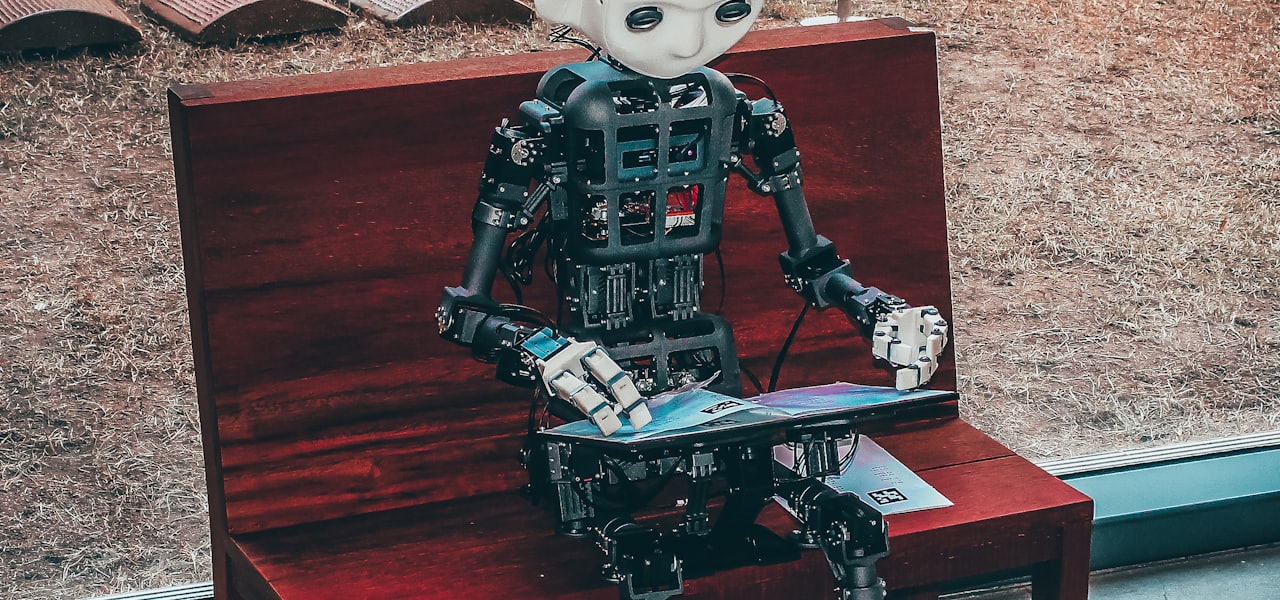
The Federation of International Robot-soccer Association (FIRA) is an international organisation organising competitive soccer competitions between autonomous robots. The matches are usually five-a-side. == History == In 1996 and 1997, this competition was known as MiroSot and was held in Daejeon, Korea. The 1996 competition offered a challenging arena to the younger generation and researchers working with autonomous mobile robotic systems. From 1998 through 2008, it was called the FIRA Cup, and in 2009, it became the FIRA RoboWorld Cup & Congress. The 15th RoboWorld Cup was held at Amrita Vishwa Vidyapeetham, Bangalore, India in September 2010. In 2013, it took place in Kuala Lumpur, Malaysia. The championship started on August 24, 2013, and ended on August 29. At that time, it involved five categories: Micro-Robot Soccer Tournament, Amire, Naro, Simulated Robot, Android, Robo and Humanoid Robot. It attracted teams from Singapore, Indonesia, Taiwan, India, China, South Korea, the United Kingdom, Mexico, Canada, Russia and Malaysia. 80 teams from 11 countries participated. In 2018, the competition had 277 teams participating from 12 countries. === Past Events === == FIRA RoboWorld Cup & Congress == This competition has 4 leagues: FIRA AIR, FIRA Sports, FIRA Challenges, and FIRA Youth. Each league has its own competitions, and each competition can have several events. === FIRA AIR === The FIRA AIR league has two associated competitions, Autonomous Race and Emergency Service. === FIRA Sports === The FIRA Sports league has four associated competitions, HuroCup, RoboSot, SimuroSot, and AndroSot. This the robot soccer league. HuroCup consists of single events for bipedal humanoid robots. The events are: archery, sprint, marathon, united soccer, obstacle run, long jump, spartan race, marathon, weightlifting, and basketball. There is an all-round competition for the single robot that performs the best overall. === FIRA Challenges === The FIRA Challenges league has three associated competitions, Autonomous Cars, Autonomous Cars Simulation, Innovation and Business. === FIRA Youth === The FIRA Youth league has six associated challenges, Sport Robots, HuroCup Junior, CityRacer, DRV_Explorer, Cliff Hanger, and Mission Impossible.
Quantum natural language processing
Quantum natural language processing (QNLP) is the application of quantum computing to natural language processing (NLP). It computes word embeddings as parameterised quantum circuits that can solve NLP tasks faster than any classical computer. It is inspired by categorical quantum mechanics and the DisCoCat framework, making use of string diagrams to translate from grammatical structure to quantum processes. == Theory == The first quantum algorithm for natural language processing used the DisCoCat framework and Grover's algorithm to show a quadratic quantum speedup for a text classification task. It was later shown that quantum language processing is BQP-Complete, i.e. quantum language models are more expressive than their classical counterpart, unless quantum mechanics can be efficiently simulated by classical computers. These two theoretical results assume fault-tolerant quantum computation and a QRAM, i.e. an efficient way to load classical data on a quantum computer. Thus, they are not applicable to the noisy intermediate-scale quantum (NISQ) computers available today. == Experiments == The algorithm of Zeng and Coecke was adapted to the constraints of NISQ computers and implemented on IBM quantum computers to solve binary classification tasks. Instead of loading classical word vectors onto a quantum memory, the word vectors are computed directly as the parameters of quantum circuits. These parameters are optimised using methods from quantum machine learning to solve data-driven tasks such as question answering, machine translation and even algorithmic music composition.
T Layout
The T-Layout is an architectural and design concept for web applications, specifically tailored to improve the user experience on mobile devices. It features a horizontally scrollable container divided into three distinct sections, each spanning the full width of the screen, and was developed to optimise space usage and streamline navigation. == Background == The T-Layout introduces horizontal scrolling as a complementary method to the conventional pop-up-based navigation system in mobile web applications. In this layout, the central section which is visible by default upon accessing the application, facilitates the main content of a URL address and is flanked by two "helper" sections. This approach minimises the need for extensive user movements, in order to reach navigation controls typically located at the top of the screen. It is aimed at enhancing the user experience on mobile devices by providing an easier way to access essential content such as the main navigation, e-commerce related screens, or user account related information, ensuring that those elements are readily accessible while requiring minimal user effort. The T-Layout was first implemented by E (e-streetwear.com) in their mobile web app layout, and it was inspired by the interfaces of well-tested native mobile apps like Instagram and Revolut. A study titled "Mobile Navigation and User Preferences Survey" indicated a preference among mobile app users for one-handed usage, primarily navigating with their thumb. These insights led to the T-Layout Experiment, which compared the efficiency of using swipe gestures to access navigational elements against reaching traditional navigation controls. == Development history == It was first released as the mobile layout of E in early 2023. It was originally developed based on six principles: user-centric functionality, lightweight filesize, HTML and CSS implementation with minimal or no use of JavaScript required, suitable both for browser and server-rendering architectures, intuitive design, and improved SEO. The development of the T-Layout was driven by the necessity for more ergonomic and user-friendly interfaces in mobile web applications. Its design, reminiscent of the letter 'T', emerged as a solution to several usability challenges mobile device users face, emphasising ease of access and efficient screen space utilisation. In July 2023, E formalised the concept and its technical specifications, introducing it to the web design and development community. In October 2023 the "Mobile Navigation and User Preferences Survey" was conducted, establishing that the vast majority of individuals prefer to use mobile applications by holding the phone in a one-handed grip, utilising only the thumb for gestures when possible. The subsequent "T-Layout Experiment", designed to measure the time in seconds and the distance (user effort) in pixels, required to access navigational elements by traditionally tapping on fixed-positioned controls compared to swiping anywhere on the screen. The results proved that swipe gestures require less time and much less effort. == Styling and features == The main characteristic of the T-Layout is its horizontal scrolling feature, which can improve navigation efficiency while preserving the functionality of traditionally structured user interfaces. Its Implementation can be achieved with a combination of HTML and styling with CSS as well as precompiled Scss and Sass, CSS-in-JS, and styled JSX. It can be either a purely HTML/CSS solution but JavaScript can be utilised as well to add more specific functionalities, while It can be implemented to both existing and new applications. Its application in server-side rendering architectures will ensure that all its underlying principles apply. Although principally each section in the layout has a distinct role and facilitates specific types of content, the T-Layout as a concept is versatile, and it is adaptable allowing modifications in the layout or how it's implemented to cater to the specific needs of different applications.
Gold (linker)
In software engineering, gold is a linker for ELF files. It became an official GNU package and was added to binutils in March 2008 and first released in binutils version 2.19. gold was developed by Ian Lance Taylor and a small team at Google. The motivation for writing gold was to make a linker that is faster than the GNU linker, especially for large applications coded in C++. Unlike the GNU linker, gold does not use the BFD library to process object files. While this limits the object file formats it can process to ELF only, it is also claimed to result in a cleaner and faster implementation without an additional abstraction layer. The author cited complete removal of BFD as a reason to create a new linker from scratch rather than incrementally improve the GNU linker. This rewrite also fixes some bugs in old ld that break ELF files in various minor ways. To specify gold in a makefile, one sets the LD or LD environment variable to ld.gold. To specify gold through a compiler option, one can use the gcc option -fuse-ld=gold. Fedora has moved gold from binutils into its own package due to concerns it is suffering from bitrot after Google's interest has moved to LLVM. In particular, gold does not read LDFLAGS variable, so cannot see libraries in folders like /usr/local/lib. On 2025-02-02 the 2.44 version of GNU Binutils removed gold from the default source distribution and into a separate package, stating that "the gold linker is now deprecated and will eventually be removed unless volunteers step forward and offer to continue development and maintenance".
Screen generator
A screen generator, also known as a screen painter, screen mapper, or forms generator is a software package (or component thereof) which enables data entry screens to be generated declaratively, by "painting" them on the screen WYSIWYG-style, or through filling-in forms, rather than requiring writing of code to display them manually. 4GLs commonly incorporate a screen generator feature. They are also commonly found bundled with database systems, especially entry-level databases. A screen generator is one aspect of an application generator, which can also include other functions such as report generation and a data dictionary. The earliest screen generators were character-based; by the 1990s, GUI support became common, and then support for generating HTML forms as well. Some screen generators work by generating code to display the screen in a high-level language (for example, COBOL); others store the screen definition in a data file or in database tables, and then have a runtime component responsible for actually displaying the form and receiving and validating user input. == Examples == Examples of screen generators include: IBM Screen Definition Facility II: generates screens for CICS BMS, IMS MFS, ISPF, GDDM and CSP/AD. Performix for Informix. Microsoft Visual Basic the forms component of Microsoft Access Oracle Developer, in particular its Oracle Forms component the QDesign component of PowerHouse SystemBuilder/SB+ the Screen Painter component of SAP's ABAP Workbench the FoxView component of FoxPro. FoxView was originally developed by Luis Castro as a dBASE screen generator named ViewGen; Fox purchased it and bundled it with FoxPro 1.0. Later, Fox replaced Castro's code with their own screen painter code. dBASE included a built-in screen generator in dBASE IV onwards; in dBASE III and earlier, third party screen generators were available, including the already mentioned ViewGen DPS 1100 for UNIVAC 1100 series mainframes.
Level set (data structures)
In computer science, a level set is a data structure designed to represent discretely sampled dynamic level sets of functions. A common use of this form of data structure is in efficient image rendering. The underlying method constructs a signed distance field that extends from the boundary, and can be used to solve the motion of the boundary in this field. == Chronological developments == The powerful level-set method is due to Osher and Sethian 1988. However, the straightforward implementation via a dense d-dimensional array of values, results in both time and storage complexity of O ( n d ) {\displaystyle O(n^{d})} , where n {\displaystyle n} is the cross sectional resolution of the spatial extents of the domain and d {\displaystyle d} is the number of spatial dimensions of the domain. === Narrow band === The narrow band level set method, introduced in 1995 by Adalsteinsson and Sethian, restricted most computations to a thin band of active voxels immediately surrounding the interface, thus reducing the time complexity in three dimensions to O ( n 2 ) {\displaystyle O(n^{2})} for most operations. Periodic updates of the narrowband structure, to rebuild the list of active voxels, were required which entailed an O ( n 3 ) {\displaystyle O(n^{3})} operation in which voxels over the entire volume were accessed. The storage complexity for this narrowband scheme was still O ( n 3 ) . {\displaystyle O(n^{3}).} Differential constructions over the narrow band domain edge require careful interpolation and domain alteration schemes to stabilise the solution. === Sparse field === This O ( n 3 ) {\displaystyle O(n^{3})} time complexity was eliminated in the approximate "sparse field" level set method introduced by Whitaker in 1998. The sparse field level set method employs a set of linked lists to track the active voxels around the interface. This allows incremental extension of the active region as needed without incurring any significant overhead. While consistently O ( n 2 ) {\displaystyle O(n^{2})} efficient in time, O ( n 3 ) {\displaystyle O(n^{3})} storage space is still required by the sparse field level set method. See for implementation details. === Sparse block grid === The sparse block grid method, introduced by Bridson in 2003, divides the entire bounding volume of size n 3 {\displaystyle n^{3}} into small cubic blocks of m 3 {\displaystyle m^{3}} voxels each. A coarse grid of size ( n / m ) 3 {\displaystyle (n/m)^{3}} then stores pointers only to those blocks that intersect the narrow band of the level set. Block allocation and deallocation occur as the surface propagates to accommodate to the deformations. This method has a suboptimal storage complexity of O ( ( n m ) 3 + m 3 n 2 ) {\displaystyle O\left((nm)3+m^{3}n^{2}\right)} , but retains the constant time access inherent to dense grids. === Octree === The octree level set method, introduced by Strain in 1999 and refined by Losasso, Gibou and Fedkiw, and more recently by Min and Gibou uses a tree of nested cubes of which the leaf nodes contain signed distance values. Octree level sets currently require uniform refinement along the interface (i.e. the narrow band) in order to obtain sufficient precision. This representation is efficient in terms of storage, O ( n 2 ) , {\displaystyle O(n^{2}),} and relatively efficient in terms of access queries, O ( log n ) . {\displaystyle O(\log \,n).} An advantage of the level method on octree data structures is that one can solve the partial differential equations associated with typical free boundary problems that use the level set method. The CASL research group has developed this line of work in computational materials, computational fluid dynamics, electrokinetics, image-guided surgery and controls. === Run-length encoded === The run-length encoding (RLE) level set method, introduced in 2004, applies the RLE scheme to compress regions away from the narrow band to just their sign representation while storing with full precision the narrow band. The sequential traversal of the narrow band is optimal and storage efficiency is further improved over the octree level set. The addition of an acceleration lookup table allows for fast O ( log r ) {\displaystyle O(\log r)} random access, where r is the number of runs per cross section. Additional efficiency is gained by applying the RLE scheme in a dimensional recursive fashion, a technique introduced by Nielsen & Museth's similar DT-Grid. === Hash Table Local Level Set === The Hash Table Local Level Set method was introduced in 2011 by Eyiyurekli and Breen and extended in 2012 by Brun, Guittet, and Gibou, only computes the level set data in a band around the interface, as in the Narrow Band Level-Set Method, but also only stores the data in that same band. A hash table data structure is used, which provides an O ( 1 ) {\displaystyle O(1)} access to the data. However, Brun et al. conclude that their method, while being easier to implement, performs worse than a quadtree implementation. They find that as it is, [...] a quadtree data structure seems more adapted than the hash table data structure for level-set algorithms. Three main reasons for worse efficiency are listed: to obtain accurate results, a rather large band is required close to the interface, which counterbalances the absence of grid nodes far from the interface; the performances are deteriorated by extrapolation procedures on the outer edges of the local grid and the width of the band restricts the time step and slows down the method. === Point-based === Corbett in 2005 introduced the point-based level set method. Instead of using a uniform sampling of the level set, the continuous level set function is reconstructed from a set of unorganized point samples via moving least squares.
List of Ada software and tools
This is a list of software and programming tools for the Ada programming language, including IDEs, compilers, libraries, verification and debugging tools, numerical and scientific computing libraries, and related projects. == Compilers == GNAT — GCC Ada compiler and toolchain, maintained by AdaCore AdaCore GNAT Pro — commercial Ada compiler with advanced tooling for high-integrity and real-time systems Green Hills compiler for Ada — Ada compiler for embedded and safety-critical systems ObjectAda — Ada development environment for safety-critical and embedded systems == Integrated development environments (IDEs) and editors == GNAT Studio — IDE developed by AdaCore Emacs — supports Ada editing with Ada mode and syntax checking Eclipse — supports Ada through GNATbench plugin Visual Studio Code — Ada support via Ada Language Server extensions == Libraries and frameworks == See also: Ada Libraries on Wikibooks Ada.Calendar — date and time library Ada Web Services (AWS) — support for RESTful and SOAP web services Ada.Text_IO — standard library for text input/output Florist (POSIX Ada binding) – open-source implementation of the POSIX Ada bindings GNAT – Ada compiler part of GCC, which also provides an extensive runtime and library package hierarchy. GtkAda – Ada bindings for the GTK+ graphical user interface toolkit Matreshka – multipurpose Ada framework supporting Unicode, XML, JSON, and more. XML/Ada – XML and Unicode processing library == Real-time and embedded systems == Ada tasking — built-in concurrency support with tasks, protected objects, and rendezvous. Ada.Real_Time — real-time clocks, delays, and scheduling. ARINC 653 Ada profiles — for avionics real-time applications OpenMP Ada bindings — parallel programming for multi-core embedded systems Ravenscar profile — subset of Ada tasking for real-time and deterministic execution == Numerical and scientific computing == Ada.Numerics — libraries for numerical methods, linear algebra, and mathematical functions. SPARK math libraries — formal-methods-compliant numerical routines == Verification, debugging, and analysis == GNATprove — formal verification and static analysis tool for Ada and SPARK GNATstack — runtime stack analysis and checking GNATcoverage — code coverage measurement for Ada projects AdaControl — style checking and metrics for Ada == Testing frameworks == AUnit — unit testing framework for Ada GNATtest — automated testing framework for Ada == Documentation and code generation == GNATdoc — generates HTML documentation from Ada source code